Computer Science & AI
The Inference Paradigm
15 min read
DESI Challenges the Cosmological Constant
Summary
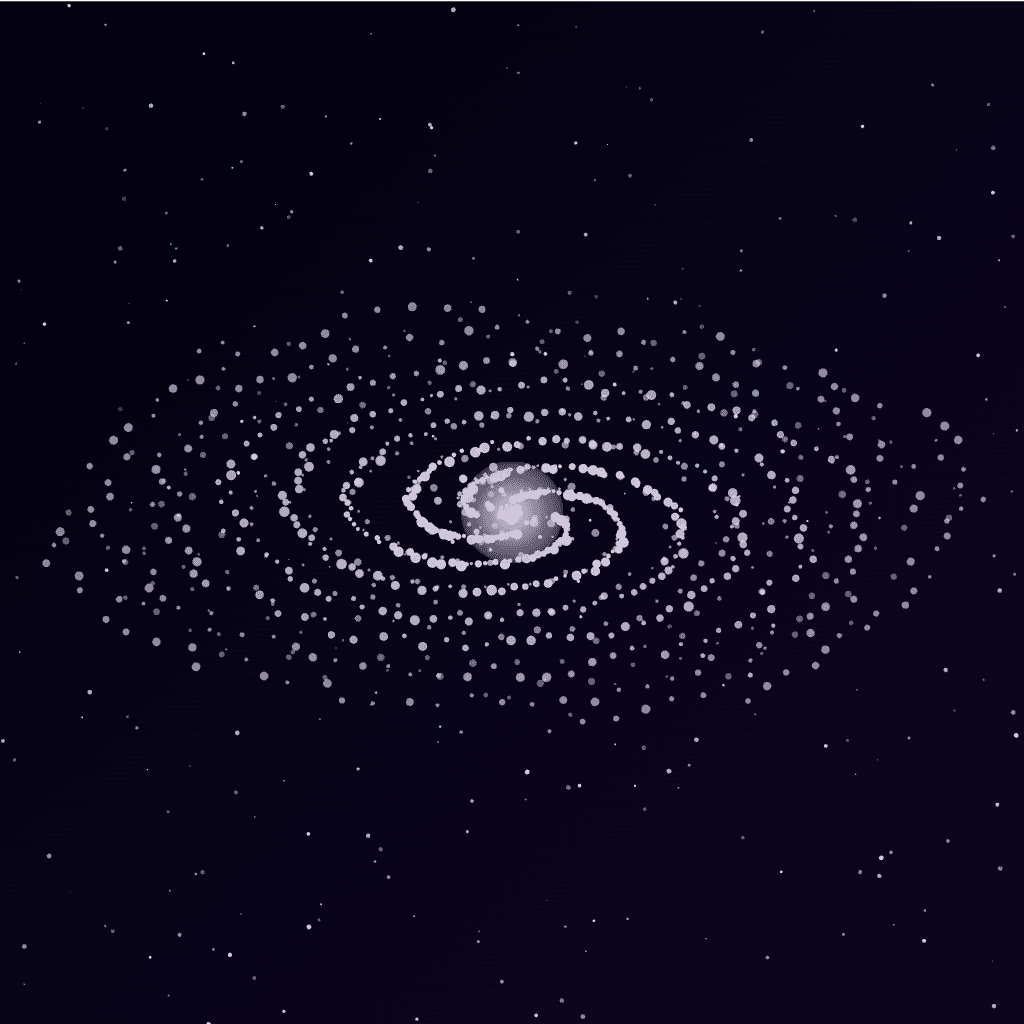
The standard model of the universe showed cracks in 2025. In March, the *Dark Energy Spectroscopic Instrument* collaboration released its second data release. When combined with other observations, the data preferred a universe where *dark energy* weakens over time, contradicting the *cosmological constant* that has anchored theoretical physics for a quarter century. If confirmed, we have been wrong about the most fundamental question in cosmology: what drives the accelerating expansion of everything. It was a year of foundations being questioned, from the nature of the cosmos to the composition of distant worlds. ## Dark Energy Weakens The *DESI* instrument, mounted on a 4-meter telescope in Arizona, measures positions and redshifts of millions of galaxies. By analyzing the clustering of these galaxies, astronomers extract the *baryon acoustic oscillation* (BAO) signal, a standard ruler left over from the early universe that reveals how cosmic distances scale with *redshift*. Data Release 2, based on three years of observations encompassing over 14 million galaxies and quasars, confirmed what DR1 had hinted at. The data prefer dark energy with a time-evolving *equation of state*.[^1] The standard *ΛCDM model* assumes the equation of state parameter $w = -1$ exactly. DESI data, combined with *cosmic microwave background* (CMB) measurements, favor $w_0 > -1$ (dark energy slightly less negative than a cosmological constant) and $w_a < 0$ (dark energy weakening over time). The universe, it seems, may not be accelerating at a constant rate. It may be changing its mind. Significance depends on systematic uncertainties in each dataset. Different supernova light-curve calibrations shift the combined fit by nearly a full sigma. Against ΛCDM, the dynamical dark energy model is preferred at $3.1\sigma$ when combining DESI BAO with CMB data. Adding supernovae increases significance to between $2.8\sigma$ and $4.2\sigma$, depending on which supernova compilation is used. As the collaboration states plainly: "Unless there is an unknown systematic error associated with one or more datasets, ΛCDM is being challenged." Implications cascade through physics. A weakening dark energy could indicate that what we call the cosmological constant is actually a dynamical field, perhaps *quintessence*, perhaps something stranger still. This also affects neutrino mass constraints. In the dynamical dark energy model, the 95% upper limit on the sum of neutrino masses relaxes from 0.064 eV to 0.16 eV. Everything connects to everything. ## Exoplanet Atmospheres at Population Scale The DESI results questioned what we know about the universe's largest scales. Cosmology's foundations may need revision. But 2025 also brought new clarity at planetary scales, where *JWST*'s third year of operations produced enough data for something unprecedented: population-level studies of exoplanet atmospheres. Astronomers could finally ask not just "what is this world made of?" but "what patterns hold across dozens of worlds?" Selection effects shape this sample. *Transmission spectroscopy*[^2] favors puffy, close-in planets with extended atmospheres. *Hot Jupiters* dominate. *Temperate terrestrials* remain beyond current reach. Fu et al. compiled the first statistical analysis of gas giant exoplanet atmospheres observed with JWST, covering eight planets with high-precision transmission spectroscopy from 3 to 5 micrometers. Their framework uses four spectral bands targeting water, sulfur dioxide, carbon dioxide, and carbon monoxide. Results reveal systematic correlations. Sulfur dioxide appears preferentially in low-mass (below 0.3 Jupiter masses) and cooler (below 1200 Kelvin) planets. Both carbon dioxide and carbon monoxide absorption correlate strongly with temperature. Under equilibrium chemistry assumptions, the sample favors super-solar *metallicity* and low carbon-to-oxygen ratios. This supports the existence of a *mass-metallicity relation* for exoplanets, analogous to the trend in solar system giant planets. This suggests common formation processes despite the diversity of planetary systems. ## The Sub-Neptune Mystery The mass-metallicity relation emerging from gas giant data suggested common formation processes across planetary systems. But gas giants are not the most common planets. That distinction belongs to *sub-Neptunes*, worlds between Earth and Neptune in size, which dominate the exoplanet census yet have no solar system analog. Understanding them requires building categories from scratch. Madhusudhan et al. surveyed JWST observations of these enigmatic worlds, which may include rocky gas dwarfs, water worlds, and mini-Neptunes. First detections of carbon-bearing molecules in the habitable-zone sub-Neptune K2-18 b generated particular attention. Atmospheric abundance constraints reveal evidence of *chemical disequilibria*, suggesting active atmospheric processes. This does not constitute evidence of life. Abiotic explanations remain viable. For sub-Neptunes with water-rich interiors, increasing atmospheric water abundance with equilibrium temperature may indicate a critical temperature threshold separating hydrogen-dominated atmospheres from steam-dominated ones. Observations support an emerging taxonomy of volatile-rich sub-Neptunes, including potentially habitable *hycean worlds*,[^3] hydrogen-rich atmospheres over water oceans, and steam worlds with supercritical water layers. ## Beyond Atmospheres: Tides, Rings, and Moons Observations of K2-18 b and other sub-Neptunes revealed chemical disequilibria that hint at active atmospheric processes. But atmospheres are not the only window into planetary nature. JWST's precision enables measurements of dynamical phenomena that reveal what lies beneath: tidal distortion, rotational flattening, rings, and moons. What a planet is made of matters less than how it responds to the forces acting upon it. Millholland and Winn explored this potential. Tidal effects are particularly accessible for hot Jupiters on close-in orbits, where tidal forces can measurably distort a planet's shape. The *Love number*[^4] $k_2$ characterizes a planet's response to tidal forces. The fractional change in radius due to tidal distortion follows: $$\frac{\Delta R}{R} \approx k_2 \frac{M_\star}{M_p} \left(\frac{R_p}{a}\right)^3$$ Distortion scales with the stellar-to-planetary mass ratio $M_\star/M_p$ and the cube of the ratio of planetary radius to orbital separation $(R_p/a)^3$. For favorable targets, JWST can distinguish between gas giant and rocky interior models through their different $k_2$ values. Rings and large moons can be detected through their effects on transit light curves. These measurements probe planetary interiors and formation histories that atmospheric observations alone cannot access. ## The Gravitational Wave Background Tidal distortions and ring systems probe planetary interiors through gravitational effects measured in light curves. But gravity itself carries information across vaster distances. In 2023, multiple *pulsar timing array*[^5] collaborations announced evidence for a nanohertz *gravitational wave background*, ripples in spacetime with wavelengths measured in light-years. The signal, detected through correlated timing residuals in arrays of *millisecond pulsars*, originates from supermassive black hole binaries throughout the cosmos. Throughout 2025, that signal came into sharper focus. NANOGrav and others refined their characterization, searching for deviations from the expected power-law spectrum that might indicate exotic physics. Searches for non-Gaussianity have not yet found evidence of deviation from standard predictions. The *Square Kilometre Array* (SKA),[^6] under construction in Australia and South Africa, will transform pulsar timing arrays when it begins operations. With sensitivity three to four times greater than current facilities, an SKA pulsar timing array will detect individual supermassive black hole binaries and study the properties of the gravitational wave background with precision no current facility can match. ## Planetary Defense Proven The gravitational wave background opens a window on cosmic structures otherwise invisible: supermassive binaries spiraling toward merger over millions of years. But not all astronomy concerns the distant universe. Some of it concerns survival. In September 2022, NASA's DART spacecraft slammed into Dimorphos, the moonlet of asteroid Didymos, testing humanity's ability to deflect a hazardous asteroid. Throughout 2025, scientists continued analyzing what that impact revealed. Raducan et al. used numerical simulations to understand what the impact revealed about Dimorphos. Their analysis indicates that Dimorphos is weak, with a *cohesive strength*[^7] of less than a few pascals, similar to asteroids Ryugu and Bennu visited by recent sample return missions. Bulk density is consistent with a *rubble pile* structure that likely formed through rotational mass shedding from Didymos. Most significantly, the simulations suggest the DART impact caused global deformation and resurfacing of Dimorphos. When ESA's Hera mission arrives in 2026, it may find a reshaped asteroid rather than a well-defined impact crater. Some ejected boulders may still orbit the system, their chaotic dynamics having protected them from re-impact through wide oscillations in eccentricity and inclination. ## Ocean Worlds Beckon The DART impact demonstrated that humanity can deflect hazardous asteroids. Hera's 2026 arrival will reveal what that deflection created. But planetary defense is reactive, responding to threats. Other missions seek something else entirely: evidence that we are not alone. *Europa Clipper*, launched in October 2024, completed its first major milestone, a gravity assist past Mars on March 1, 2025. It will return to Earth for a second gravity assist in December 2026 before arriving at Jupiter in 2030. During the Mars flyby, the spacecraft's REASON[^8] (Radar for Europa Assessment and Sounding: Ocean to Near-surface) instrument successfully detected structures beneath the Martian surface, a capability that could not be tested on Earth. This radar will be essential for understanding how Europa's ice shell may capture materials from the subsurface ocean and transfer them to the surface. When Clipper arrives at Europa, it will conduct 49 flybys at altitudes as low as 25 kilometers, searching for evidence of habitability in the ocean that scientists believe contains more than twice as much liquid water as all of Earth's oceans combined. ## The Return to the Moon Europa Clipper represents robotic exploration at its most patient: answers will not arrive until the 2030s. But humanity's ambitions extend beyond robots. Some frontiers require human presence. As of December 2025, *Artemis II* is scheduled to launch no earlier than February 2026, sending four astronauts around the Moon, the first crewed lunar mission since Apollo 17 in 1972.[^9] Crew includes NASA astronauts Reid Wiseman, Victor Glover, and Christina Koch, along with Canadian Space Agency astronaut Jeremy Hansen. Over ten days the mission will test NASA's Orion spacecraft in deep space for the first time with humans aboard. The crew will conduct science investigations including geological observations of the lunar far side, health studies of astronauts in deep space, and tests of life support systems under varying metabolic conditions. Glover will become the first person of color and Koch the first woman to travel to the Moon. Hansen will be the first non-American. All of this sets the stage for Artemis III, which aims to land astronauts near the lunar south pole. SpaceX's Starship conducted multiple orbital test flights in 2025, advancing the vehicle designated for Artemis lunar landing, though full operational capability remains in development. ## The Deepest Views Artemis aims to return humans to the Moon, to plant boots where none have stood since 1972. But understanding where we came from requires looking not forward but back, and much further back than the Moon. JWST peered into the early universe throughout 2025, revealing galaxies that formed within the first few hundred million years after the Big Bang. These earliest structures appear unexpectedly bright and mature, challenging models of galaxy formation that predicted slower assembly. ## Mars Sample Return Uncertain Tension between JWST observations and galaxy formation models has not been resolved. Some early galaxies may be intrinsically more luminous; others may host active nuclei that boost their brightness. Spectroscopy now underway will provide answers. But not all questions get answered on schedule. Some of the most ambitious plans of 2025 faced delays that may extend for decades. Efforts to return samples from Mars, collected by the *Perseverance* rover and cached for future retrieval, faced continued uncertainty throughout the year. NASA cancelled the original retrieval architecture in 2024 after cost estimates exceeded $11 billion. Revised concepts under evaluation would delay sample return to the late 2030s at earliest. Program survival depends on sustained political support across administrations. Samples remain on Mars, sealed in titanium tubes and deposited at designated locations. They represent the first opportunity to apply Earth laboratory techniques to Martian materials, potentially revealing whether life ever existed on the planet. The scientific value is undisputed. The question is when and how the samples will come home. ## Cracks and Glimpses The year fractured old certainties and assembled new ones. DESI data questioned the cosmological constant that anchored physics for a quarter century. JWST observations built taxonomies for worlds that have no solar system analog. DART proved humanity can reshape an asteroid. Europa Clipper began its long journey toward an ocean that may harbor the conditions for life. These are not separate stories but manifestations of how science advances: through foundations that crack open and glimpses of structure that emerge from the fractures. We thought we understood the universe's fate. We may not. We could not classify sub-Neptunes. Now we can. We wondered whether we could deflect an asteroid. We have. We asked whether gravitational waves from supermassive binaries would be detectable. They are, tremors in spacetime that we feel rather than see. ## What the Data Cannot Say Dark energy may be weakening, or DESI may harbor systematic errors that will only become clear when other surveys weigh in. The cosmos keeps its counsel. K2-18 b may harbor life, or its carbon-bearing molecules may arise from processes we have not yet imagined. Biology leaves ambiguous fingerprints. Hera will arrive at Dimorphos in 2026 and find either a reshaped moonlet or something no one predicted. We altered a world. Now we wait to learn what form it took. Europa's ocean may prove habitable. That answer lies in the 2030s, when Clipper completes its flybys and scientists can say whether the conditions for life exist beneath the ice. Martian samples may return to Earth this decade or next or never, depending on budgets and political will. They wait in titanium tubes on a distant world, the most valuable rocks in the solar system, their secrets locked until human hands can touch them. Another year ends with more questions than answers. That is, perhaps, as it should be. The questions have grown more precise, the tools to answer them more powerful, and what we stand to learn (where we came from, whether we are alone) as consequential as ever. --- **Citations**: [1] DESI Collaboration. "DESI DR2 Results II: Measurements of Baryon Acoustic Oscillations and Cosmological Constraints." arXiv:2503.14738, March 2025. [2] Fu, G., et al. "Statistical trends in JWST transiting exoplanet atmospheres." arXiv:2501.02081, January 2025. [3] Madhusudhan, N., et al. "Exploring the Sub-Neptune Frontier with JWST." arXiv:2509.19247, September 2025. [4] Millholland, S., and Winn, J.N. "Exploring Exoplanet Dynamics with JWST: Tides, Rotation, Rings, and Moons." arXiv:2512.06120, December 2025. [5] Jiang, J.-Q., and Piao, Y.-S. "Search for the non-linearities of gravitational wave background in NANOGrav 15-year data set." arXiv:2401.16950, January 2024. [6] Shannon, R.M., et al. "The SKAO Pulsar Timing Array." arXiv:2512.16163, December 2025. [7] Raducan, S.D., et al. "Physical properties of asteroid Dimorphos as derived from the DART impact." arXiv:2403.00667, March 2024. [8] "Radar that could find life on Europa just nailed its first big test." ScienceDaily, August 2025. [9] "Artemis II Flight Crew, Teams Conduct Demonstration Ahead of Launch." NASA, December 2025. **Footnotes**: [^1]: The equation of state parameter $w$ relates the pressure and energy density of dark energy: $p = w\rho$. For a cosmological constant, $w = -1$ exactly. Values of $w > -1$ correspond to "quintessence" models. [^2]: Transmission spectroscopy measures light from a host star filtered through a planet's atmosphere during transit, revealing absorption features characteristic of atmospheric constituents. [^3]: "Hycean" worlds are a proposed class of habitable planets with hydrogen-rich atmospheres and liquid water oceans. The hydrogen atmosphere would extend the habitable zone outward from the star. [^4]: The Love number $k_2$ quantifies a body's response to tidal forces. Gas giants have $k_2 \approx 0.5$; rocky planets have $k_2 \approx 0.3$ or less. [^5]: Pulsar timing arrays detect gravitational waves by measuring correlated variations in the arrival times of pulses from millisecond pulsars. The Hellings-Downs correlation is the characteristic angular pattern expected from an isotropic gravitational wave background. [^6]: The Square Kilometre Array, when complete, will be the world's largest radio telescope, with collecting area approaching one square kilometer spread across Australia and South Africa. [^7]: Cohesive strength measured in pascals indicates extremely weak binding; for comparison, sand has cohesive strength of roughly 100 Pa, and solid rock exceeds 10 MPa. [^8]: REASON uses ice-penetrating radar to image structures up to 30 km below Europa's surface. The technique has been proven on Earth's ice sheets and was tested during the Mars flyby. [^9]: Apollo 17 launched on December 7, 1972. Gene Cernan was the last human to walk on the Moon, departing on December 14, 1972.
Get the complete story with rich visuals, audio narration, and the context you need to understand this breakthrough.