Computer Science & AI
The Inference Paradigm
15 min read
Quantum Error Correction Finally Works
Summary
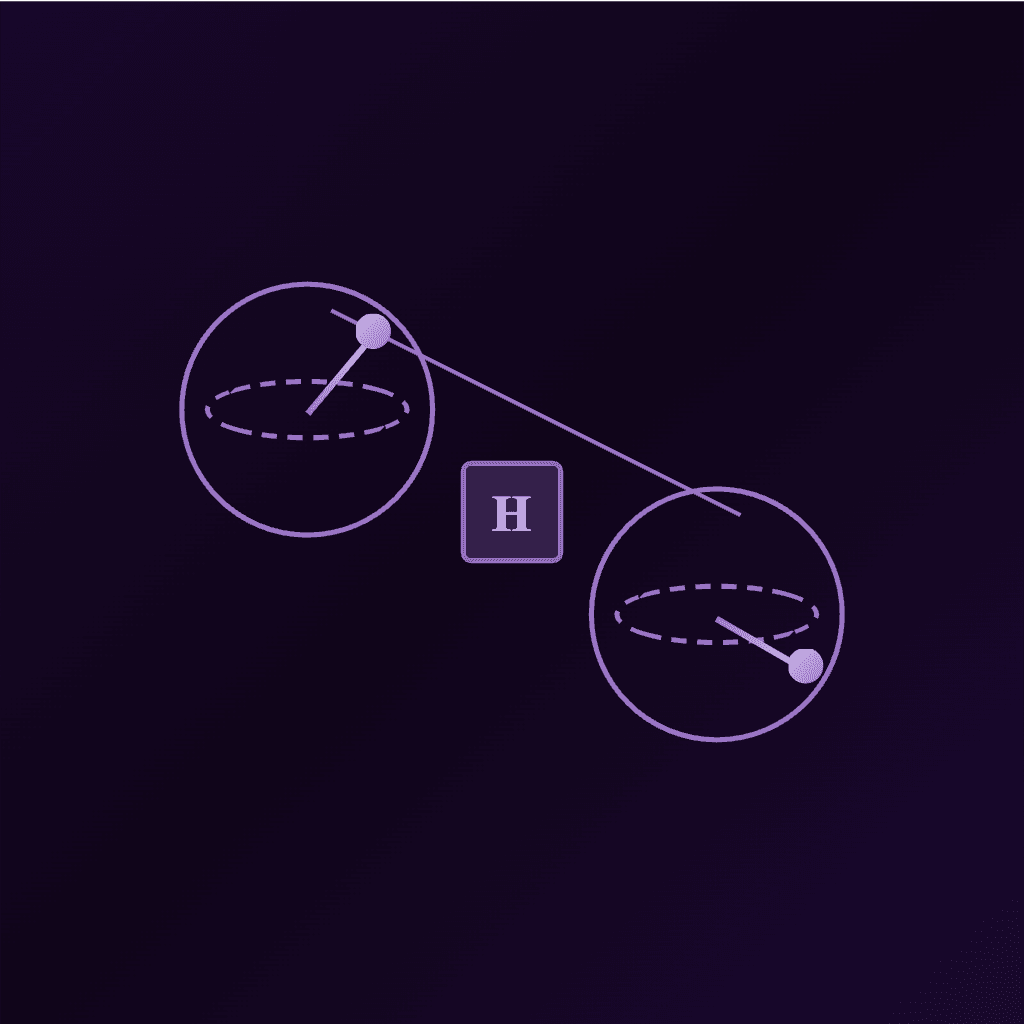
For three decades, quantum computing faced a fundamental problem: adding qubits made errors worse, not better. Every additional qubit introduced more noise, more decoherence, more ways for fragile quantum states to collapse into classical mush. In December 2024, Google's Willow processor crossed that threshold. As the team added more qubits, error rates dropped. The curve bent the other way. The result, published in *Nature*, demonstrated that scalable *quantum error correction* is possible in principle. Whether it is possible in practice, at the scale needed for useful computation, remains the field's central question. But the wall has cracked. 2025 brought advances across the discipline, from quantum processors to cosmic observations, from attosecond spectroscopy to astrophysical measurements. Each result refined our understanding of nature at its limits. ## The Error Correction Threshold Quantum computers are exquisitely sensitive to noise. Every interaction with the environment (thermal fluctuations, stray electromagnetic fields, cosmic rays) can corrupt the fragile quantum states that encode information. For decades, theorists knew that error correction could, in principle, overcome this fragility. But the correction process itself introduces errors. The critical question: could the cure outpace the disease? Google's Willow processor answered affirmatively. The 105-qubit chip achieved a *logical error rate* of $0.143\% \pm 0.003\%$ per error correction cycle using a distance-7 *surface code*.[^1] More importantly, scaling from distance-3 to distance-5 to distance-7 codes caused the logical error rate to decrease by a factor of $\Lambda = 2.14 \pm 0.02$ with each step.[^2] This exponential suppression of errors with increasing *code distance* is the defining characteristic of *below-threshold* operation. Below the error threshold, adding more qubits to the code actually helps. Mathematically, if the physical error rate $p$ is below the threshold $p_{\text{th}}$, the logical error rate scales as: $$p_L \propto \left(\frac{p}{p_{\text{th}}}\right)^{\lfloor (d+1)/2 \rfloor}$$ That exponent $\lfloor (d+1)/2 \rfloor$ grows with code distance $d$, so larger codes exponentially suppress errors. Willow demonstrated this scaling experimentally, with $p < p_{\text{th}}$ confirmed across multiple code sizes. Below-threshold operation does not yet mean useful quantum advantage. Error correction overhead remains substantial. Current estimates suggest millions of physical qubits for practical algorithms. The achievement is a necessary condition, not a sufficient one. Reaching this milestone required advances in qubit coherence (T1 times improved from 20 to 100 microseconds compared to Google's earlier Sycamore chip) and in real-time classical decoding. The decoder must identify and correct errors faster than they accumulate. Willow won that race. ## The Topological Alternative Below-threshold operation represents a milestone, not a solution. The overhead remains substantial: millions of physical qubits for useful algorithms. But one architecture is not the only path forward. Microsoft pursued something more exotic. *Topological qubits*, based on *Majorana zero modes*, encode information not in the state of individual particles but in the global properties of exotic quasiparticles.[^3] Local perturbations cannot corrupt globally encoded information, offering intrinsic protection against noise. Microsoft's Majorana 1 processor represents the first hardware realization of this long-theorized approach. Claims warrant scrutiny. The same research program retracted earlier Majorana results in 2018. The physics community expects extraordinary evidence before accepting topological protection. If topological qubits work reliably, they would require far fewer physical qubits per logical qubit than surface codes. The tradeoff is that physics is more exotic and less well-characterized. Whether topological or surface code approaches prove more practical at scale remains contested. The two strategies may complement each other, with topological qubits providing stable memory and surface codes enabling fault-tolerant gates. ## Preparing Entangled States Both approaches require the same fundamental capability: preparing entangled quantum states without the preparation process itself introducing fatal errors. *Greenberger-Horne-Zeilinger* (GHZ) states are maximally entangled states where $n$ qubits exist in a superposition of all zeros and all ones:[^4] $$|\text{GHZ}\rangle = \frac{1}{\sqrt{2}}\left(|00\ldots0\rangle + |11\ldots1\rangle\right)$$ The $1/\sqrt{2}$ factor normalizes the state. Measuring any single qubit collapses all others to match, demonstrating quantum correlations that have no classical analog. GHZ states are essential resources for quantum metrology, secure communication, and computing. Preparing them *fault-tolerantly*, without the preparation process itself introducing errors, is a prerequisite for many quantum algorithms. Researchers demonstrated new protocols for fault-tolerant GHZ state preparation that achieve higher fidelities with fewer *ancilla qubits* than previous methods. The protocols combine transversal gates with error detection to filter out corrupted preparations before they propagate through a computation. ## The Muon's Magnetic Moment Quantum computing advances inch forward. But precision physics probed a different frontier in 2025, one where the Standard Model itself is on trial. The muon *anomalous magnetic moment*, $a_\mu = (g-2)/2$, has long served as a precision test of the *Standard Model*. Any discrepancy between measurement and theoretical prediction would indicate new physics: undiscovered particles or forces contributing to the muon's magnetic properties.[^5] Fermilab's Muon g-2 experiment released results from data collected through 2020, achieving an uncertainty of 0.20 parts per million, a twofold improvement over previous measurements. Combined experimental value now stands at: $$a_\mu^{\text{exp}} = 116592059(22) \times 10^{-11}$$ Parenthetical (22) denotes the uncertainty in the last two digits. Tension depends on which theoretical calculation you trust. *Lattice QCD* computations now agree with experiment, but data-driven methods using electron-positron collision data maintain a 4-5 sigma discrepancy. The final Fermilab dataset may not resolve the disagreement if the theoretical division persists. ## Electrons on the Attosecond Scale The muon anomaly may herald undiscovered particles, or merely reveal gaps in our understanding of the strong force. Either answer reshapes physics. Meanwhile, experimentalists captured phenomena at timescales that theory has long described but observation could never reach. The 2023 Nobel Prize recognized the development of *attosecond*[^6] light pulses: flashes lasting $10^{-18}$ seconds, short enough to capture electron motion within atoms. Throughout 2025, the field matured from demonstration to application. Researchers used *attosecond transient absorption spectroscopy* to directly measure electron thermalization times in metals. When light excites electrons in a metal, they initially occupy a non-thermal distribution before collisions redistribute energy. The measured *thermalization times* ranged from 38 femtoseconds in magnesium to just 2 femtoseconds in cobalt. Variation correlates with electronic structure. Materials with high *densities of states* near the *Fermi level* thermalize faster because more scattering pathways are available. Results connect ultrafast dynamics to bulk material properties, enabling prediction of thermalization times from band structure calculations. Attosecond techniques now track charge transfer in molecules, electron-hole dynamics in semiconductors, and the real-time evolution of chemical reactions. ## Moiré Materials Come of Age Ultrafast spectroscopy has become a tool, not just an achievement. A different class of materials advanced from novelty to frontier research platform. When two atomically thin sheets are stacked with a small twist angle, the resulting *moiré pattern* creates a superlattice with dramatically altered electronic properties. At *magic angles* near 1.1°, electronic bands become nearly flat, enhancing electron-electron interactions and enabling exotic phases. *Twisted bilayer graphene*, the original moiré superconductor discovered in 2018, was joined this year by twisted bilayer WSe₂.[^7] This *transition metal dichalcogenide* system exhibits superconductivity at 5° twist with a critical temperature of 426 millikelvin. The superconducting state appears adjacent to a phase with Fermi surface reconstruction, suggestive of antiferromagnetic order. Sharp boundary between superconducting and magnetic phases hints at *spin-fluctuation-mediated pairing*, a mechanism distinct from conventional *phonon-mediated superconductivity*. Material properties absent in graphene (spin-orbit coupling, spin-valley locking, intrinsic magnetism) may enable superconducting phases that graphene cannot host. Theoretical work extended the moiré framework to predict *chiral topological superconductivity* in twisted graphene systems, with *Chern numbers* tunable by chemical potential and twist angle.[^8] Experimental confirmation remains pending. ## Photonic Time Crystals From materials that twist in space, physicists turned to materials that oscillate in time. The name sounds like science fiction, but the physics is real. Ordinary crystals have atoms arranged periodically in space. *Time crystals*, first proposed in 2012 and demonstrated in 2017, exhibit periodicity in time: their properties oscillate indefinitely without external driving. *Photonic time crystals* extend this concept to light, materials whose optical properties vary periodically in time rather than space. The symmetry of physics inverts. Space becomes time, frequencies become momenta, gaps in energy become gaps in motion. Researchers achieved the first experimental demonstration of two defining properties: *k-gap amplification*[^9] and *temporal topology*. In conventional photonic crystals, frequency gaps forbid certain photon energies. In photonic time crystals, momentum gaps forbid certain photon momenta while amplifying others. Amplification differs fundamentally from conventional gain media. Rather than stimulated emission from excited atoms, energy transfers to the electromagnetic field from the time-varying dielectric constant itself, the vacuum donating energy through its oscillations. This was demonstrated in a transmission-line metamaterial platform operating at microwave frequencies. Extending photonic time crystals to optical frequencies remains challenging. Rapid, large-amplitude modulation of material properties is required. But theoretical proposals now exist for achieving this in carefully designed nanostructures. For now, terminology outpaces technology. ## Room-Temperature Magnetic Semiconductors A different frontier advanced: materials that combine semiconducting and magnetic properties at room temperature. *Spintronics*, electronics that exploit electron spin rather than charge, requires exactly such materials. They are rare. Most magnetic semiconductors lose their magnetism far below room temperature. A new class of room-temperature magnetic semiconductor emerged, based on supramolecular self-assembly of uranyl complexes with cyclodextrin. The films exhibit p-type semiconducting behavior with remarkably high *hole mobility* (3200 cm²V⁻¹s⁻¹) and a *Curie temperature* above room temperature. This arises from *ferrotoroidicity*,[^10] a magnetic ordering in which magnetic moments arrange in vortex patterns. The ordered channels that enable high charge mobility also support long-range magnetic order at elevated temperatures. Whether these materials can integrate with conventional semiconductor manufacturing remains to be demonstrated. But the existence proof opens new directions for spintronic device design. ## Quantum Electrodynamics in Extreme Fields At cosmic scales, physicists tested quantum electrodynamics in conditions impossible to create on Earth. *Quantum electrodynamics* (QED) predicts that empty space itself has optical properties in extreme electromagnetic fields. *Vacuum birefringence*, the dependence of light's speed on its polarization in magnetized vacuum, was predicted in 1936 but has proven extraordinarily difficult to observe. Neutron stars provide the most extreme magnetic fields in the universe, reaching $10^{11}$ Tesla or more. Observations of polarized X-rays from *magnetars*[^11] revealed signatures consistent with vacuum birefringence. Lower-energy and higher-energy X-rays showed different polarization signatures, as predicted by QED for photons passing through the vacuum resonance region near the neutron star surface. Observations required NASA's Imaging X-ray Polarimetry Explorer (IXPE), which measures X-ray polarization with sufficient sensitivity to detect the effect. Results confirm that even "empty" space responds to electromagnetic fields in ways classical physics cannot explain. ## Thresholds Crossed Below-threshold operation represents a qualitative shift. Adding qubits now improves rather than degrades logical performance. Logical error rates decrease exponentially with code distance. Fault-tolerant quantum computers are not imminent. Millions of physical qubits may still be required for useful computation. But the underlying physics permits scalability. What was once a hope is now a plan. Muon g-2 illustrates the interplay between experiment and theory in precision physics. Experimental precision has outpaced theoretical certainty about hadronic contributions. This discrepancy may be evidence for new physics, or it may dissolve as lattice QCD calculations mature. For now, the tension remains unresolved, an open question at the frontier of what we know. Moiré materials and high-pressure superconductors represent complementary paths to engineering quantum phases. Moiré systems offer tunability and accessibility. A graduate student can twist graphene. High-pressure systems offer higher critical temperatures at the cost of experimental difficulty. Diamond anvils are unforgiving tools. ## The Next Barriers Fault-tolerant quantum computers may require millions to billions of physical qubits. The threshold has been crossed, though the summit is not yet in view. The muon anomaly may dissolve as lattice QCD calculations mature, or it may herald undiscovered particles. Either answer reshapes physics. Moiré superconductivity operates below 1 Kelvin, too cold for practical applications without a revolution in cryogenics or materials. Photonic time crystals at optical frequencies remain theoretical, concepts outpacing the materials needed to realize them. The year demonstrated that precision, patience, and engineering can unlock phenomena that theory long predicted. What remains are the hardest problems, the ones that require not just cleverness but persistence measured in careers. Beautiful physics, hard work, and both will continue. --- **Citations**: [1] Google Quantum AI. "Quantum error correction below the surface code threshold." Nature (December 2024). [2] "Making quantum error correction work." Google Research Blog, December 2024. [3] "Microsoft unveils Majorana 1." Microsoft Research, 2025. [4] Christandl, M., et al. "Fault-tolerant quantum computation with constant overhead for general noise." arXiv:2512.02760, December 2025. [5] Zaid, E. "Run 2/3 measurement of the muon anomalous magnetic moment by the Muon g-2 experiment at Fermilab." arXiv:2506.21219, June 2025. [6] de Roulet, B.R., et al. "Initial electron thermalization in metals measured by attosecond transient absorption spectroscopy." arXiv:2406.03567, June 2024. [7] Guo, Y., et al. "Superconductivity in twisted bilayer WSe₂." arXiv:2406.03418, June 2024. [8] Bera, K., et al. "Chiral topological superconductivity in twisted bilayer and double bilayer graphene." arXiv:2512.17380, December 2025. [9] "Observation of wave amplification and temporal topological state in a non-synthetic photonic time crystal." Nature Communications (2025). [10] Qi, J., et al. "Room-temperature magnetic semiconductor with superhigh hole mobility and ferrotoroidicity." arXiv:2510.09327, October 2025. [11] Heyl, J., et al. "Detection of vacuum birefringence in magnetar soft X-ray polarization." Science (2024). [Reported in EurekAlert as "photon metamorphosis."] **Footnotes**: [^1]: The surface code is a leading candidate for fault-tolerant quantum computing. Physical qubits are arranged in a 2D grid, with logical qubits encoded in patterns of stabilizer measurements. [^2]: "Distance" in error-correcting codes refers to the minimum number of physical errors required to cause a logical error. Higher distance provides more protection but requires more physical qubits. [^3]: Majorana zero modes are quasiparticle excitations that are their own antiparticles. They have been pursued as building blocks for topological quantum computing since 2001. [^4]: GHZ states are named after Daniel Greenberger, Michael Horne, and Anton Zeilinger, who analyzed their properties in 1989. They are the canonical example of multipartite entanglement. [^5]: The anomalous magnetic moment $a_\mu$ measures the deviation of the muon's magnetic moment from the value predicted by the Dirac equation. It receives contributions from all known particles and forces. [^6]: Attosecond spectroscopy uses light pulses with durations on the order of $10^{-18}$ seconds to probe electron dynamics in real time. The 2023 Nobel Prize recognized Pierre Agostini, Ferenc Krausz, and Anne L'Huillier for this work. [^7]: WSe₂ is a transition metal dichalcogenide with strong spin-orbit coupling and a native band gap, properties absent in graphene that may enable different superconducting mechanisms. [^8]: Chern numbers are topological invariants that characterize the global properties of a quantum state. Non-zero Chern numbers indicate topologically protected edge states. [^9]: In momentum (k) space, photonic time crystals exhibit gaps where certain momenta are forbidden, analogous to frequency gaps in ordinary photonic crystals. [^10]: Ferrotoroidicity is a type of magnetic ordering where magnetic moments form closed loops or vortices. It is distinct from ferromagnetism, antiferromagnetism, and ferrimagnetism. [^11]: The magnetic field strength near magnetar surfaces can exceed $10^{11}$ Tesla, compared to Earth's field of about $5 \times 10^{-5}$ Tesla, a difference of 15 orders of magnitude.
Get the complete story with rich visuals, audio narration, and the context you need to understand this breakthrough.